Archive | January, 2013

Highway through the danger zone

29 Jan

We are behind in our blogging (again!). I blame the fact that while I had the best of intentions for my time this week, my iPad (where I write all these wonderfully entertaining updates) was left behind in a bus and I haven’t been able to inspire myself to kick H off a computer and write all this down. Also, I am quite lazy anyways. Until now that is! Under normal circumstances I would be feeling guilty and pushing H and I to get our acts together and start putting together some posts so you could all know where we are and what we are doing. But fortunately, as you may have noticed on our countdown, G and M are on their way to join us in Ecuador and that means that for two blissful weeks we will have someone else responsible for all the updates. Exactly like the last time G came to visit, we have gotten so helplessly far behind that we have even changed countries without an update. And so on this fine Tuesday I will wrap up our last days in Colombia, and H will be taking over the first week we spent in Ecuador.

The debate as to whether or not certain areas of Colombia are dangerous is endless. There are areas that have historically been controlled by a blend of paramilitaries, narco traffickers, the FARC, and other such notorious groups, and these are the ones that people have been sure to warn us about. These are also the areas nearest to the borders or the jungle, and are the exact areas we had to push through in order to get south to Ecuador. Throughout our time in the interior we were cautious and tried to be very aware of our surroundings. And nothing happened other than fun times with ridiculously sweet locals who went out of their way to help us. Then we arrived in Pasto, and our cautiousness and suspicion were greeted by very interesting locals. I have found that Colombians in general are very fond of attention, but in Pasto they would stop their car in the middle of the road and get out to pose in H’s pictures. They would also make the strangest smirk face at us in the street, and once I started to ignore the madness in favor of enjoying the buildings and they got a bit verbally aggressive in their demand for eye contact. So. Strange.

But Pasto is a very interesting city, surrounded by hills rolling into a ring of mountains. There are old buildings in various states of repair strewn through town, and the views from the church on the top of one of the hills was fairly impressive.
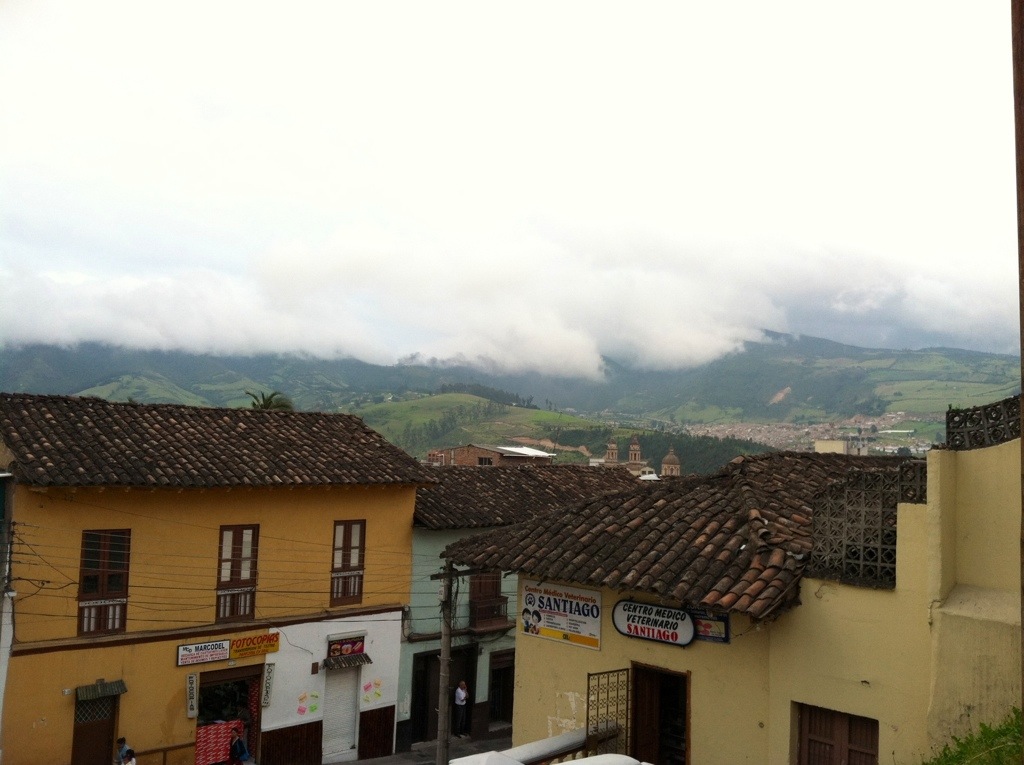
20130119-201503.jpg
In fact, there are quite a few impressive churches, gilded or painted, gothic or colonial, and more often than not full of people in various states of prayer.

20130119-201537.jpg

20130119-201518.jpg
But nowhere did we come across anything scary or dangerous. Unless you include the Anorexic Style store:

20130119-201528.jpg

We were happy to find that the women in this town were less plastic than we had come across in other Colombian cities, but I’m not sure a trade for excessively thin anorexia is an upgrade.

The best part of our time in Pasto is finding one of our good friends from Guatape. We decided to all get out-of-town for a day trip to the Laguna de la Concha, where we trekked into some swampy tall grass around a seriously pretty lake.

20130119-201553.jpg

With nothing else really to keep us in Pasto, and my being fairly unsure how to react to the locals, we moved along to Ipiales, Colombia’s main border city with Ecuador. We were cautious. We had even brought a male along with us for extra security. And Ipiales was a little freaky.

We stayed in what we were told is one of the safer areas of town, which also happened to be a half block away from a red light district. Apparently no one messes with hookers, since they have their own market security by catering to all members of the male community. Our hotel asked us not to be outdoors after 10pm, to only walk on certain streets, and to be careful when we were out-of-doors. And H swears that she could both see and feel the fear in people’s eyes as we moved about. We were good, only went to the main square to get nourishment and then returned straight to our hotel for movie watching. We did get to see the ladies at work on our way back in, an interaction that surprised all three of us in how overt it all was.

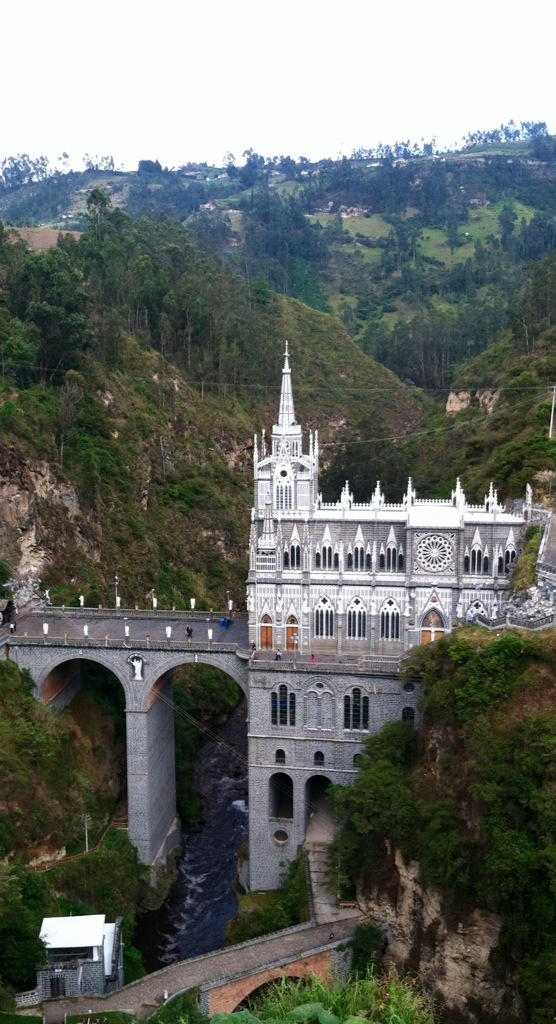
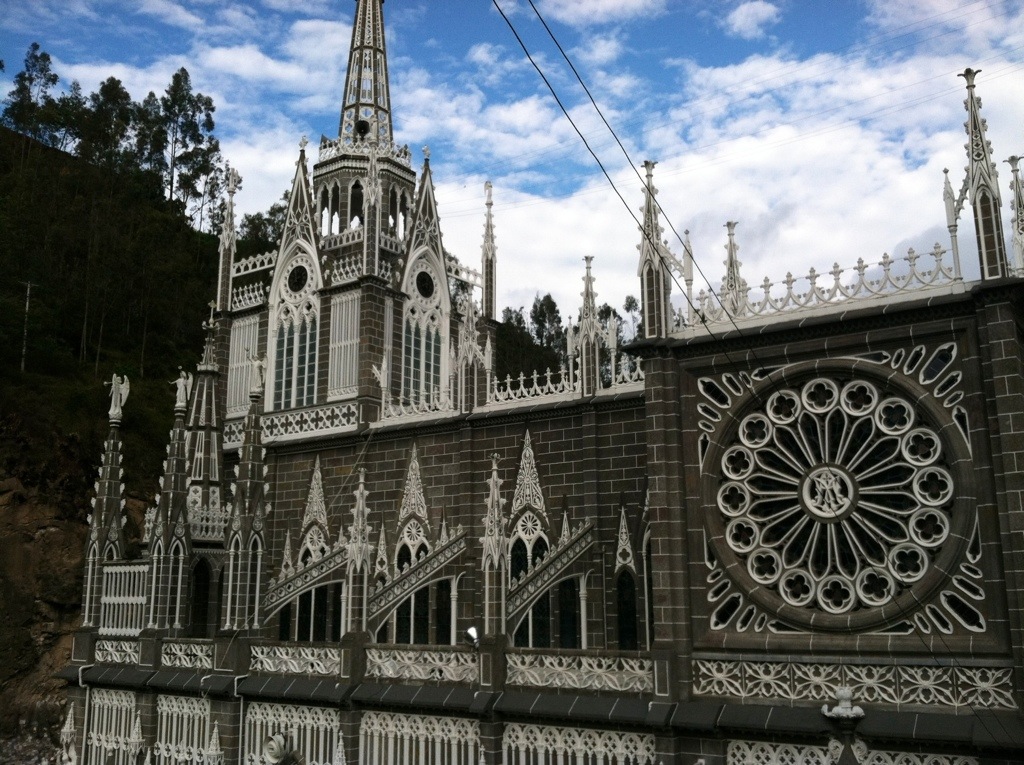
The only reason to stay in Ipiales is because we wanted to see the church at Las Lajas, a nearby town. It is well-known and a huge pilgrimage site, apparently second in the world for miracles attributed to it.
20130119-202229.jpg

20130119-202219.jpg

So of course I went and prayed for a miracle for us. I was picturing as many people as I could being happy, rolling through fields of flowers in love in life. That’s a pretty good miracle in my eyes… and we admired the church, its river and waterfall, and had a seriously peaceful morning. Fantastic way to spend our last hours in Colombia. Then we booked it straight across the border to Ecuador!
The interior

21 Jan

The escape from Cali was just the beginning of our intense exit from Colombia, and since we had overstayed our allotted time frame in Cali we were pushing ourselves toward the border with renewed vigor. The transition has not been easy, since we had to shift our travel habits from sleeping during the day and salsa dancing until the early hours of the morning (9am bedtimes) to our more typical camping habits of going to bed at sunset (around 7pm) and waking up with the sunrise (around 6am). But we packed up our lives and set out for the interior of southern Colombia.

First stop, Tierradentro. This little area off into the forest of southern Colombia is not the easiest place to get to. The buses are a bit sporadic, and once we arrived in town we soon learned that there is not much to really call a “town”. We stayed with an adorable older couple who let us pitch tent in their driveway, and the husband invited us to use the kitchen but unfortunately the two stores in the area may sell chips and cookies, but the vegetables only come in once a week and everything else is purchased hours away in the nearest pueblo.

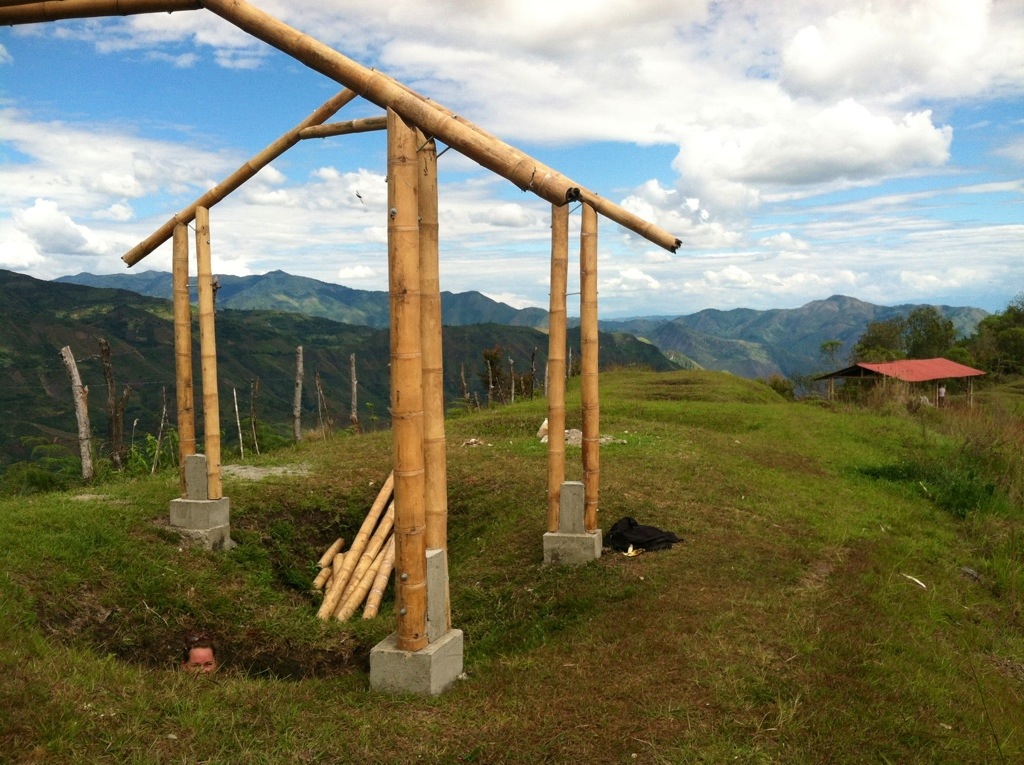
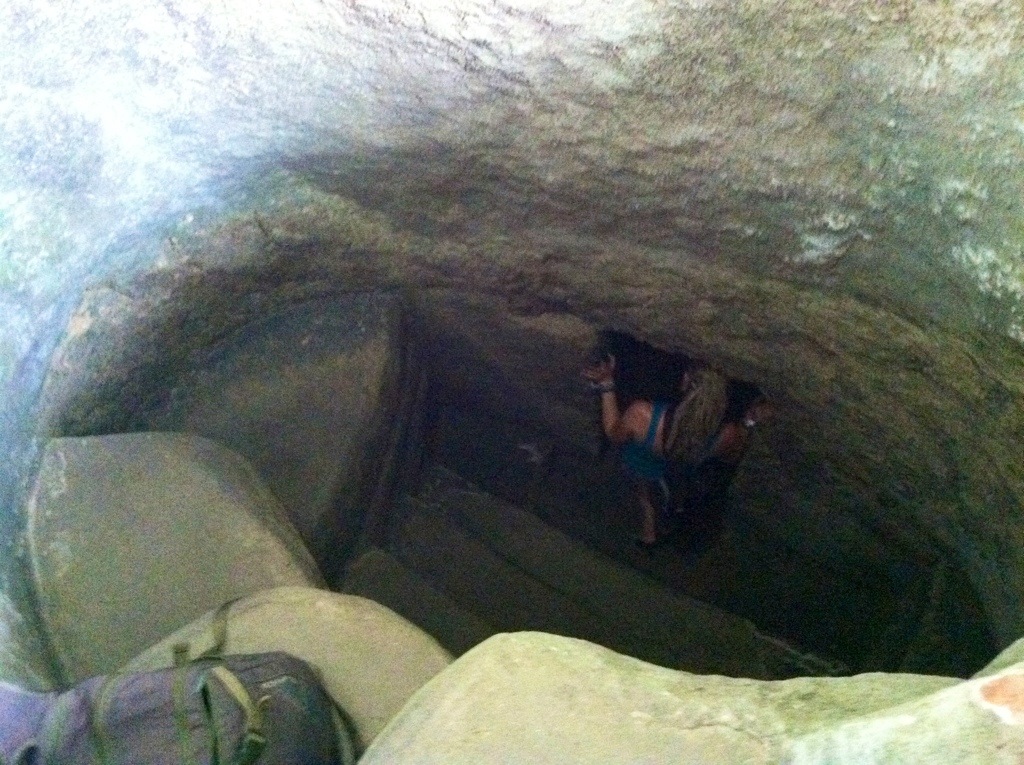
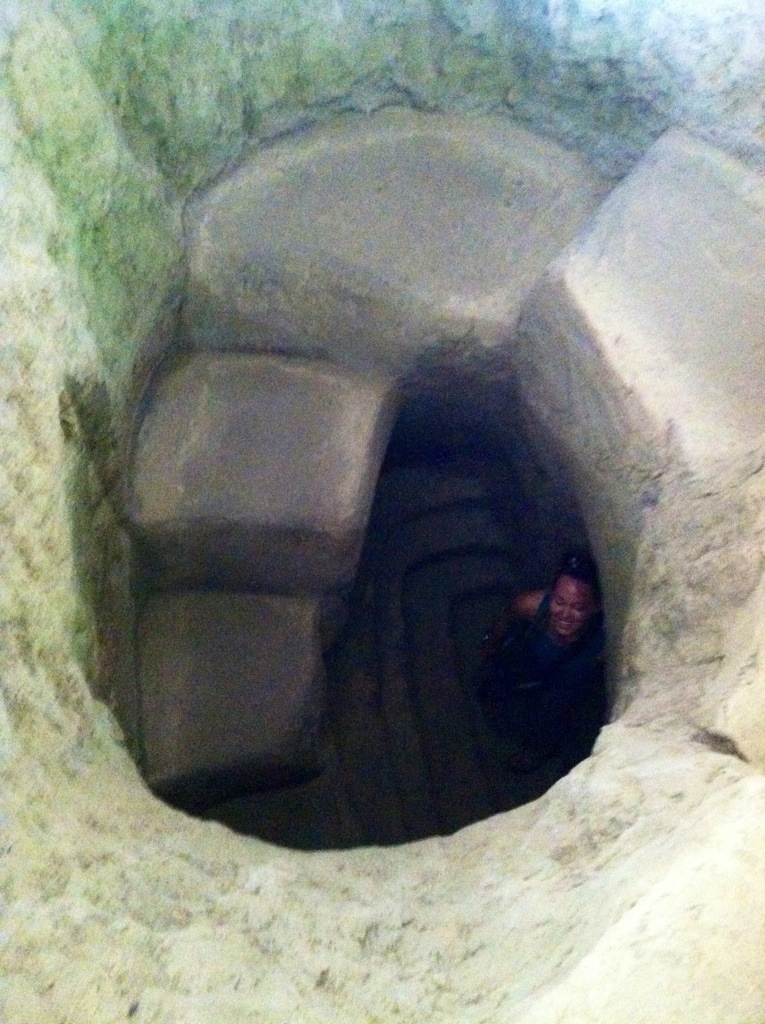
Tierradentro is a large archeological area where centuries ago the locals had decided that their dead should be placed into elaborately painted caves carved out of the ground. This involved some crafty spiral staircases and interesting pillars, and many of the caves actually remained undiscovered until modern times. They are being preserved, so the only way to see them is by carefully peeking into holes:
20130113-210731.jpg
and more holes:
20130113-210742.jpg
and even more holes until it felt a bit like being a prairie dog, popping up at random:
20130113-210757.jpg
The holes are not all well marked, and at one of the four sites (El Aguacate, which also has the best views) there are more than 60 holes to explore. That is a lot of climbing in and out of small, awkward spaces! Not all are painted, not all are carved, but all are too dark for my poor iPhone to be able to get a quality photo of the interior. The best ones were so dark that even H’s amazing camera could not capture the eerie and magical quality of the place.

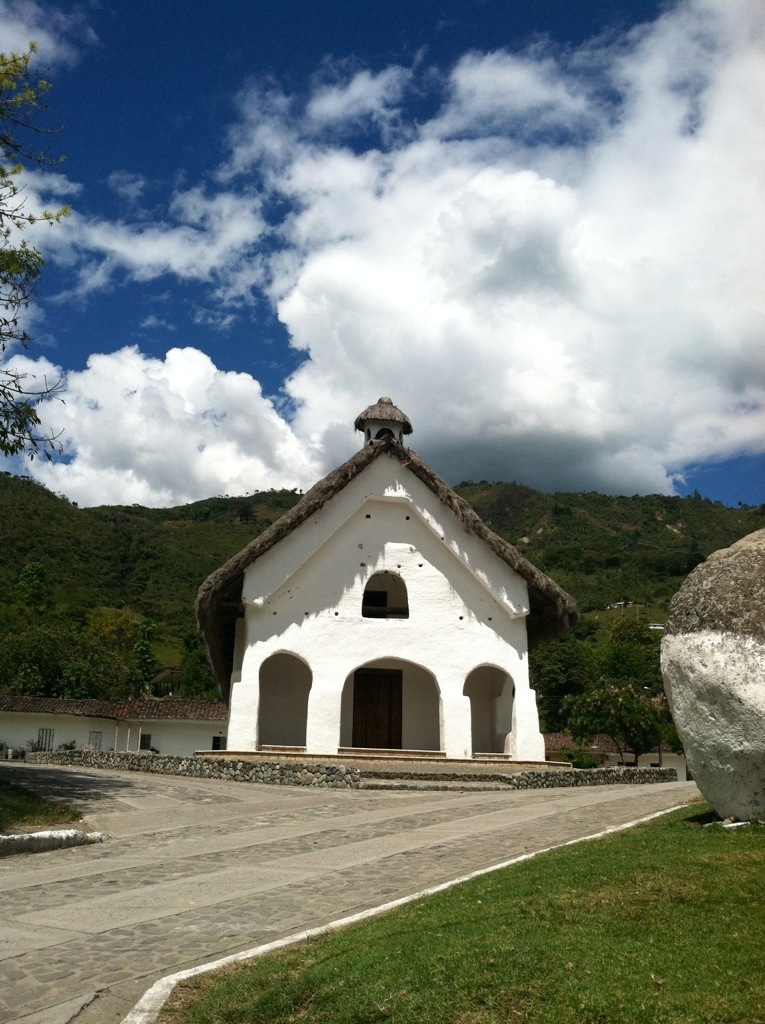
We hiked to all four sites (Segovia, El Duende, Alto de San Andrés, and El Aguacate) and a nearby village, San Andrés de Pisimbalá, in our day hike here, stopping for some helado and to stretch our legs after the holes at the local colonial church:
20130113-210748.jpg
Looks like something out of the Flintstones, right? So unique!

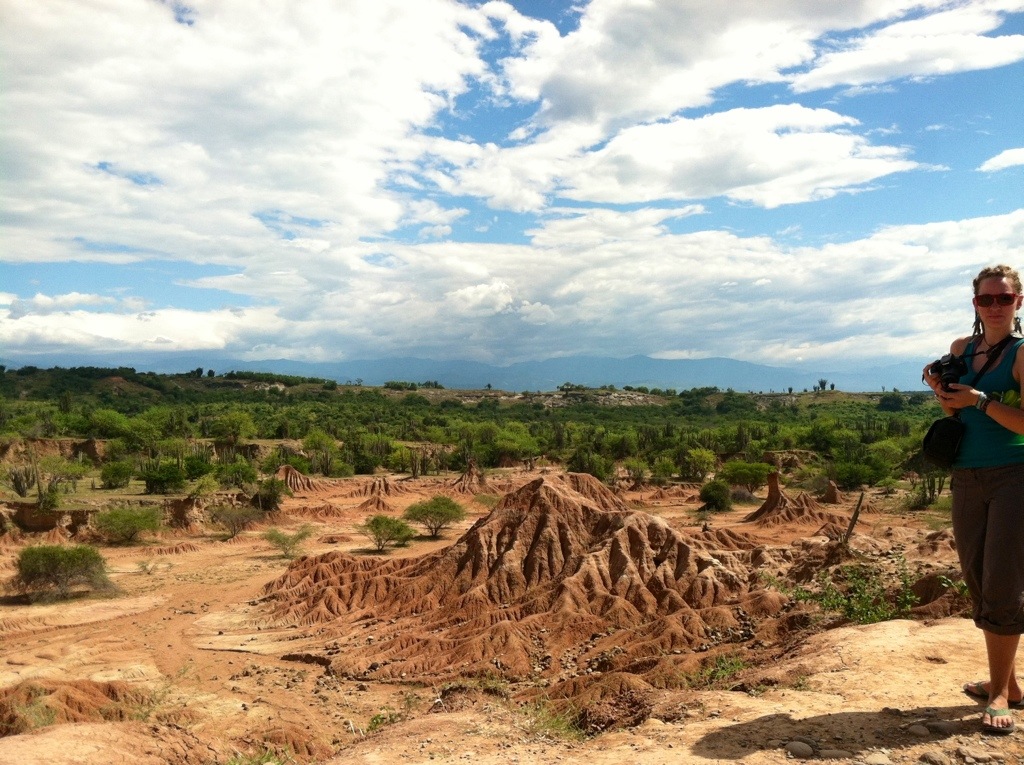
Next stop, the desierto de Tatacoa. We had discussed with a friendly meteorologist we met in Tierradentro that this desert may have been caused rather than occurring naturally. I have no educated opinion on the matter, except that it is quite pretty, whether natural or not, just as our meteorologist had predicted. And one of the best things about Tatacoa was the transport to get out there, more modified motorcycles!
20130113-210804.jpg
We had definitely found a desert, and it was dry and hot and wonderful.
20130113-210812.jpg
We camped at the local Astrological Observatory, and in the evening leaned out of our tent flaps and watched their laser point out different stars in the beautifully full night sky. Deserts always have the prettiest skies, no? But Tatacoa also had some very serious blood sucking insects (which was unexpected to us) so we trekked through the Labyrinth of Cusco (very impressive maze!) and out to the Hoyos (white desert lookout) before we moved on.

Our third stop was at San Agustin, where we were placed back onto the gringo trail. Luckily we stayed at the most adorable old man’s Posada Campesina, which he now runs solo since his wife passed away six months ago. The entire family absorbed us into their fold, told us about all of the options for visiting ruins, and made sure we stayed safe in the more rough areas. They were absolutely incredible!

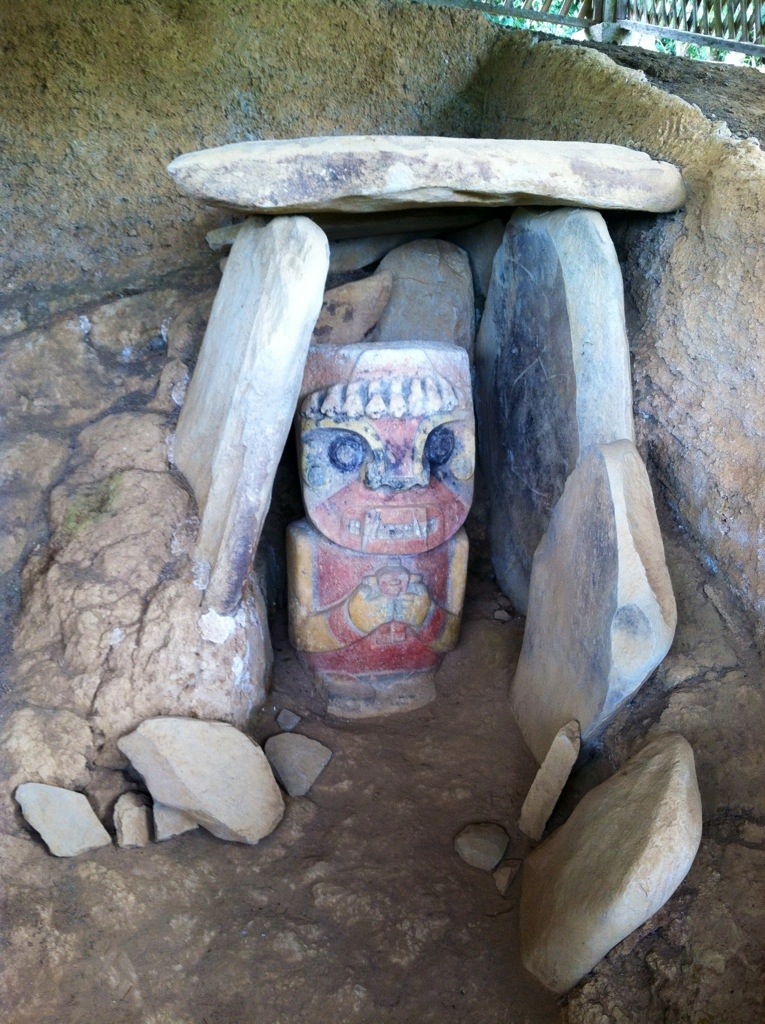
San Augstin has over 11 different tourist activities to do around the city that are spread across mountain peaks and around the beautiful Magdalena River. The ancient sites here are also tombs and are not very far away, but they are completely different from Tierradentro. Here they carved statues out of stone that are perfectly symetrical and well perserved. With how spread out everything was we quickly realized our limited funds were going to prevent us from going to every site, since most would require jeep or horse tours (fantastic, but not inexpensive). We debated the merits of each site with our hosts and decided to hitch/bus/walk to seven. The first day we hitched to the Archelogical Park and rambled along the four different mesitas full of tombs and into a jungle walk along statues. Then we went on an epic hike to El Tablón, La Chaquira, and La Pelota. The statues are so awesome and well done that even their backs are carved!
20130113-211056.jpg
While some are also painted:
20130113-211205.jpg
On the second we crossed the Magdalena River and hitched/bused to two more sites, Alto de las Piedras and Alto de Los Idolos, and then down to the Salto del Mortiño. After checking out all the sites for the day we would head back to our family (and their adorable puppy) to cook some dinner over a campfire and boil our drinking water for the next day. This was an exciting and difficult task but we enjoyed tortillas, pasta, and pasta-flavored water from our exciting fire!

20130113-211236.jpg
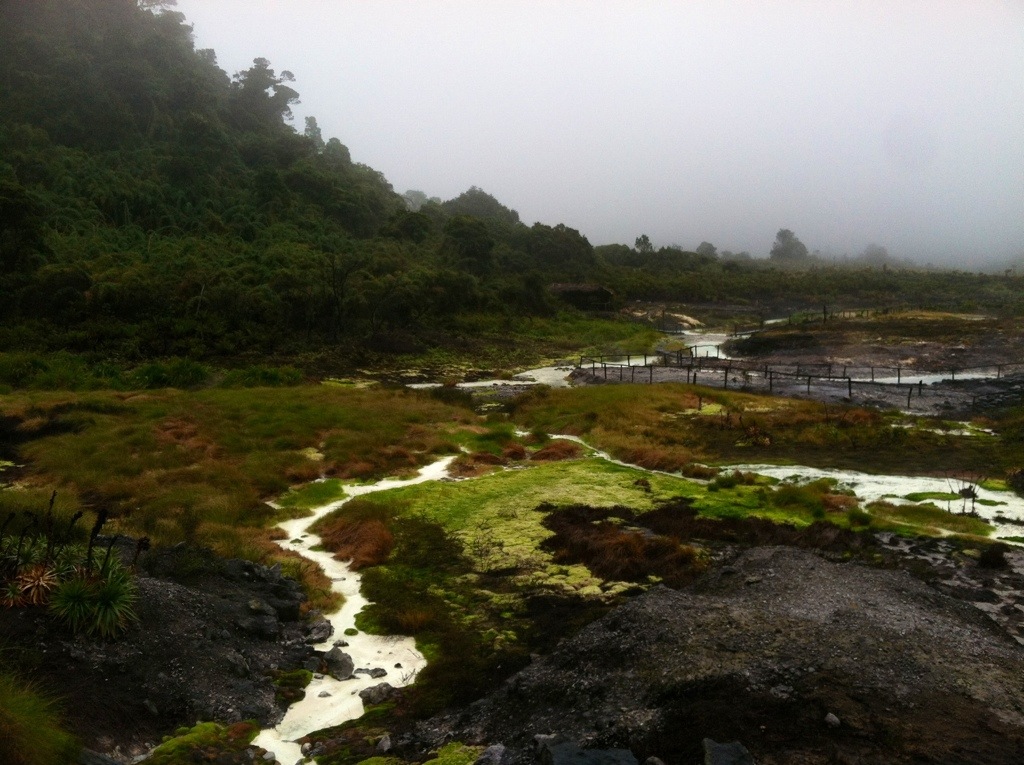
Our last stop was PNN Purace so we could get our bacteria/geology nerd on. PNN Purace is a giant reserve that was once the head quarters of the FARC but since 2002 the Colombian militia has been moving them out. We are still not 100% sure what the safety level of this area is, but many locals told us we would be fine. This adventure required an early start with a wake up call at 3:34 am and a bus at 4:30 am! Early. But we made it to the Termales de San Juan and viewed the different colored bacteria and algae that thrived off of the hot spring-river combo. It was beautiful and we had the entire place to ourselves!

20130114-152525.jpg

20130114-152537.jpg

20130114-152547.jpg

20130114-152554.jpg

20130114-152605.jpg
5 km from the Termales there is a 30 meter waterfall that we decided to hike down to. Luckily about 2 km into our walk a semi truck drove up to us and allowed us to hold on to the rearview mirror and passenger side door and drove us up to the muddy path for the waterfall. This (so far) was the best hitch in our lives and we felt like we were puppies with our heads out of the window! Our lovely hitch friends then promptly warned us about the safety conditions and sent us on our way.

20130114-152657.jpg
After this waterfall we hiked back up to the main headquarters, hitched with an adorable family, hiked to another breathtaking waterfall, caught a bus where we stood for over 1.5 hours, saw a GAINT waterfall on the side of the road, and arrived back in Popayan to get mushroom-stuffed arepas! It was a splendid day full of beautiful nature and wonderful Colombians.